[ SERVICES / USER TESTING ]
VERIFY
USABILITY.
Verify important tasks with real users.
We watch how people use your website, e-shop, app or prototype. We find out whether they can get oriented, complete important tasks and which parts of the interface they don’t understand.
You get specific findings and recommendations on what to change to make the product clearer and easier to use.
DURATION
1–4 weeks
FORMAT
Moderated and online
SAMPLE
By the research question
PACKAGE
Standard UX test
[ HOW WE TEST ]
We choose the format by the goal of the study.
01
Moderated testing
A researcher watches the participant complete tasks, asks follow-up questions and helps reveal why they got stuck or decided differently at a particular point.
IN DEPTH · IN THE LAB AND ONLINE02
Unmoderated testing
Participants complete the prepared tasks on their own. This format makes it possible to quickly involve more people and compare their results.
LARGER SAMPLE · ONLINEDepending on the testing goal we bring in thinking aloud, a follow-up interview, short surveys and screen recording.
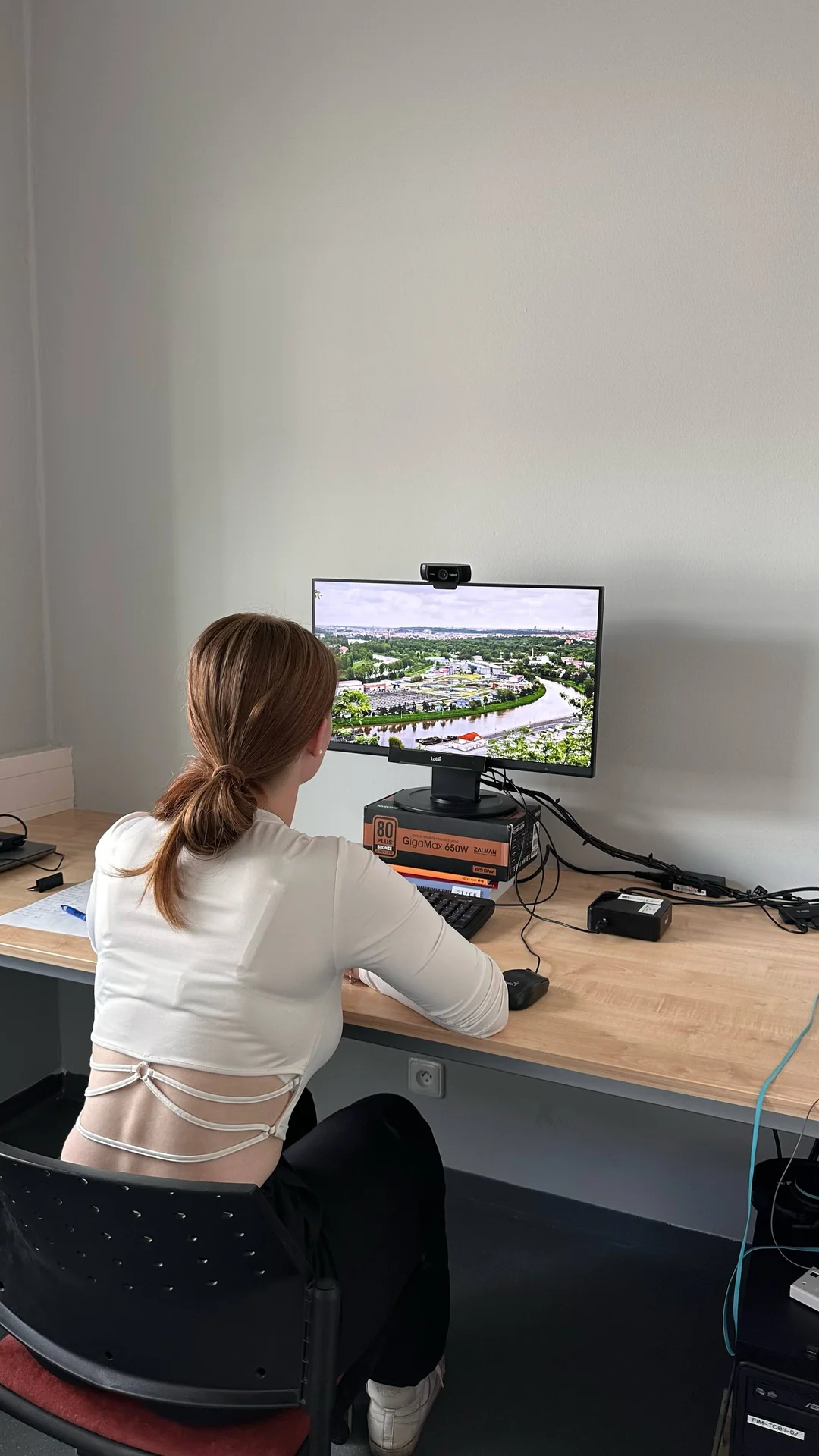
In the lab, tests can be complemented with eye tracking — you see not only what the user did, but also what they saw while doing it.
[ WHAT TESTING REVEALS ]
Where the interface helps — and where it gets in the way.
Task completion
We find out whether people can handle important tasks, how long they take and at which steps they get stuck.
Interface clarity
We reveal elements, labels and information that users don’t understand or overlook.
Reasons for decisions
We find out what users expect, why they choose a particular path and whether their statements match their actual behaviour.
[ HOW TESTING WORKS ]
From the goal to concrete changes.
Goal and scenario
We clarify what you need to verify and prepare realistic tasks.
Participant selection
We define a suitable target group and recruit participants according to the agreed criteria.
Testing
Participants complete the prepared tasks. We watch their progress, errors, reactions and comments.
Analysis and recommendations
We evaluate the findings, sort them by importance and turn them into concrete proposed changes.
[ OPTIONAL EXTENSION ]
When you also need to measure attention.
User testing shows whether people can handle a task and where they get stuck. Eye tracking can additionally measure precisely which elements they noticed, what they overlooked and how their attention changed during the task. We add biometric methods only when they match the goal of the study.
[ FREQUENTLY ASKED QUESTIONS ]
How many participants are needed?
For a qualitative reveal of the main problems, 5–8 participants per segment are usually enough. For comparing variants or statistical evaluation a larger, more precisely designed sample is needed — we propose the scope based on the research question.
How long does user testing take?
Most often 1–4 weeks depending on the scope, the recruitment method and the number of participants. We set the exact schedule after clarifying the goal and target group.
How much does user testing cost?
The price depends on the number of participants, the recruitment method, the testing format and the scope of the output. After a short initial brief we recommend a suitable scope and prepare a concrete quote.
Can you also test a prototype?
Yes. We test finished websites, e-shops and apps as well as clickable prototypes. The sooner we reveal a problem, the easier and cheaper it usually is to fix.
How does user testing differ from a UX audit?
A UX audit is an expert review of the interface without participants. User testing observes real users completing tasks and verifies how the problems show up in practice.
Is eye tracking part of user testing?
Not in the standard scope. We offer eye tracking as a separate extension when you need to precisely measure visual attention and find out which elements people noticed or what they overlooked.
Can we watch the testing live?
Yes. For moderated tests, by arrangement you can follow the session from a separate room or remotely, always with regard to participant consent and the study conditions.